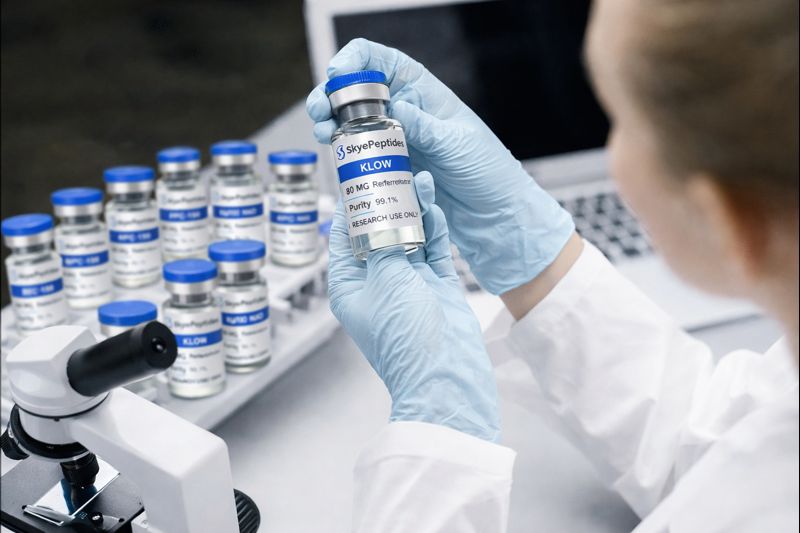
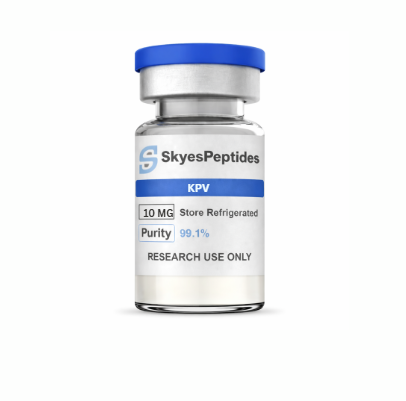
KPV peptide (Lysine–Proline–Valine) is a short bioactive tripeptide fragment derived from the larger alpha-melanocyte-stimulating hormone (α-MSH). In biomedical research, KPV has attracted attention due to its potent anti-inflammatory properties and its ability to modulate immune responses without broadly suppressing immune function. Because of its small size and specific biological activity, KPV is considered a valuable model compound for studying inflammation regulation, epithelial integrity, and immune signaling pathways.
What Is KPV Peptide?
KPV is a naturally occurring peptide fragment that retains many of the anti-inflammatory effects of α-MSH while lacking its pigmentation-related activity. This separation of functions makes KPV particularly interesting to researchers who want to study inflammation modulation without influencing melanocortin pathways related to skin pigmentation.
Structurally, KPV consists of only three amino acids—lysine, proline, and valine—which gives it unique stability and signaling properties compared to longer peptides. Despite its simplicity, it interacts with multiple cellular pathways involved in immune regulation, oxidative stress, and tissue protection.
Origin and Biological Background
KPV is derived from the C-terminal region of α-MSH, a peptide that plays a role in inflammation control, appetite regulation, and pigmentation. Researchers discovered that even after removing the rest of the α-MSH molecule, the KPV fragment retained significant anti-inflammatory activity, suggesting that this short sequence contains a core functional motif.
This finding led to extensive investigation into KPV as an independent bioactive peptide, particularly in models of inflammatory disease, tissue injury, and immune dysfunction. Its minimal structure also makes it easier to synthesize, purify, and modify for experimental purposes.
Mechanisms of Action
KPV primarily exerts its effects through modulation of inflammatory signaling pathways. It has been associated with reduced expression of pro-inflammatory cytokines such as TNF-α, IL-6, and IL-1β, while supporting anti-inflammatory mediators. This balanced approach helps regulate immune responses rather than completely shutting them down.
Additionally, KPV has been linked to activation of intracellular signaling cascades that promote cellular resilience, antioxidant defense, and epithelial barrier integrity. These effects make it particularly relevant in studies of gut inflammation, skin irritation, and systemic inflammatory responses.
KPV and the Immune System
In immunological research, KPV is often studied for its ability to influence macrophage activity, T-cell responses, and neutrophil behavior. Unlike traditional anti-inflammatory drugs that may suppress immune function broadly, KPV appears to fine-tune immune activity, helping to restore balance rather than induce immunosuppression.
This regulatory effect makes KPV a compelling compound for studying chronic inflammation, autoimmune conditions, and immune-mediated tissue damage in controlled laboratory settings.
Research Applications
- Inflammation and immune modulation studies
- Gastrointestinal barrier integrity research
- Skin inflammation and wound healing models
- Oxidative stress and cellular protection experiments
- Neuroinflammation and immune-brain interaction research
In gastrointestinal research, KPV has been investigated for its ability to support epithelial barrier function and reduce inflammatory damage in the gut lining. This makes it particularly relevant in studies exploring inflammatory bowel conditions and intestinal permeability.
Delivery, Stability, and Bioavailability
Like many peptides, KPV is susceptible to enzymatic degradation in biological environments, particularly in the digestive system. This presents challenges for oral delivery, which is why researchers often explore alternative administration methods or protective formulation strategies.
Encapsulation technologies, modified peptide analogs, and specialized delivery systems have been studied to enhance KPV stability and absorption. Storage conditions are also critical—KPV is typically kept in lyophilized form at low temperatures to maintain structural integrity.
Quality Control and Purity
Because KPV is used in sensitive biological research, purity and batch consistency are essential. Reputable suppliers should provide Certificates of Analysis (COA) that verify peptide identity, purity level, and absence of contaminants such as endotoxins or residual solvents.
Common analytical methods used to validate KPV include high-performance liquid chromatography (HPLC) and mass spectrometry. Researchers should prioritize vendors that offer transparent testing documentation and traceable manufacturing processes.
Limitations and Considerations
Although KPV shows strong anti-inflammatory properties in preclinical models, its effects can vary depending on dosage, delivery method, and experimental design. Small peptides like KPV may also have short biological half-lives, which can complicate long-term studies.
Additionally, because KPV interacts with multiple signaling pathways, isolating its specific mechanisms can be challenging. Careful experimental controls and well-designed protocols are necessary to draw reliable conclusions.
Conclusion
KPV peptide represents a powerful tool for studying inflammation regulation and immune modulation in biomedical research. Its ability to reduce inflammatory signaling while supporting tissue integrity makes it particularly valuable in studies related to gut health, skin inflammation, and systemic immune responses.
However, challenges related to stability, delivery, and biological variability highlight the need for continued investigation. As research into short bioactive peptides advances, KPV remains one of the most promising models for understanding how small peptide fragments can exert significant biological effects.