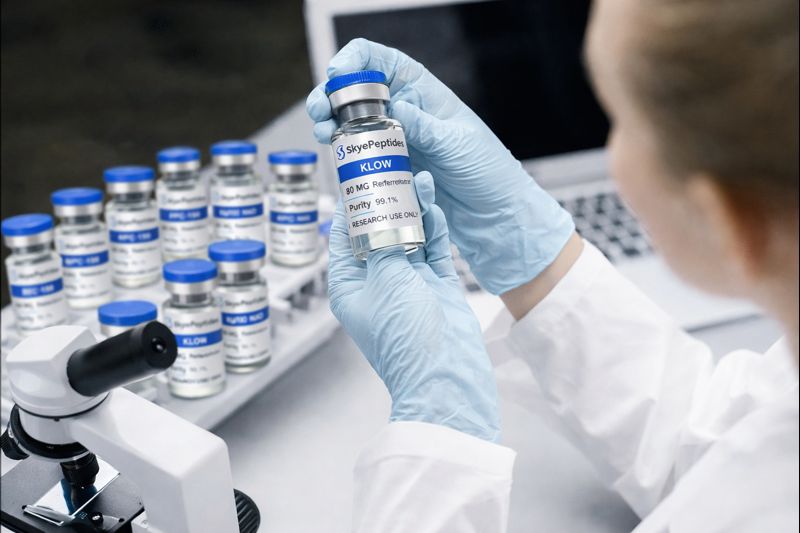
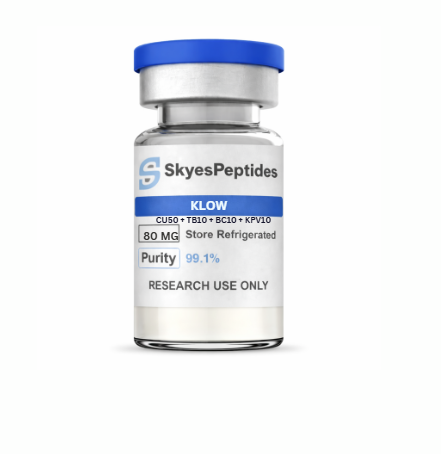
Klow peptide is a synthetic, research-grade peptide widely used in laboratory studies focusing on metabolic regulation, cellular signaling, and tissue repair mechanisms. Researchers often explore Klow peptide dosage to ensure accurate, reproducible experimental outcomes in controlled lab models.
This guide provides an overview of dosage considerations, handling practices, and best practices for sourcing high-purity Klow peptide for research purposes.
What Is Klow Peptide?
Klow peptide is a short-chain peptide designed for in vitro and in vivo research. Its sequence allows precise study of:
- Metabolic and hormonal regulation
- Signal transduction and receptor activation
- Cellular repair and tissue regeneration
- Energy optimization and mitochondrial function
By using Klow peptide in lab experiments, researchers can investigate peptide-mediated cellular processes with high reproducibility.
Understanding Klow Peptide Dosage in Research
Dosage is a critical factor in laboratory studies involving peptides. For Klow peptide, there is no approved human or veterinary dosage, as it is strictly for research purposes. Instead, dosage recommendations focus on experimental concentration ranges suitable for in vitro or preclinical studies.
1. In Vitro Research
- Peptides are typically diluted in sterile solvents such as distilled water or PBS (phosphate-buffered saline)
- Concentrations are measured in micromolar (µM) or nanomolar (nM) ranges depending on the cell type and study design
- Researchers should follow published experimental protocols or pilot studies to determine effective concentrations
2. In Vivo Research
- For animal or preclinical models, peptide dosage is calculated based on body weight (e.g., micrograms per kilogram, µg/kg)
- Dosing schedules are defined according to study design, experimental endpoints, and ethical considerations
- Reconstitution and storage must follow lab-grade guidelines to maintain peptide stability
Important: Always refer to peer-reviewed studies or lab-standard protocols for safe and reproducible dosing. Avoid assumptions or extrapolations outside of a research setting.
Handling and Storage Guidelines
Correct handling ensures Klow peptide retains stability and bioactivity, which is critical for accurate dosing in experiments:
- Store lyophilized peptide in a cool, dry environment
- Reconstitute only when needed using sterile solvents
- Avoid repeated freeze-thaw cycles to prevent degradation
- Protect peptides from light and moisture
- Use sterile equipment and gloves during all handling steps
Document all preparation and dosing steps to maintain reproducibility across experiments.
Sourcing High-Purity Klow Peptide
Reliable experimental results depend on high-quality peptide sourcing. When looking to buy Klow peptide for research, consider suppliers that provide:
- Purity ≥ 98% with Certificate of Analysis (COA)
- Transparent batch and production information
- Lab-grade, contamination-resistant packaging
- Storage, handling, and reconstitution instructions
Using verified suppliers ensures consistency in peptide activity and experimental outcomes.
Conclusion & Research Disclaimer
Klow peptide is a valuable tool for laboratory research in metabolic function, signaling pathways, and tissue regeneration. Accurate dosing, proper handling, and verified sourcing are essential to producing reproducible and reliable results.
Disclaimer: Klow peptide is for research use only. It is not intended for human or veterinary consumption. Dosage guidelines provided here are strictly for experimental, laboratory studies.