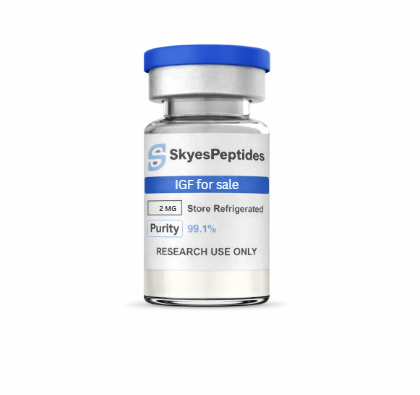
IGF LR3 peptide, or Insulin-like Growth Factor 1 Long R3, is a modified form of IGF-1 widely used in laboratory research. Designed to support studies in tissue growth, cell proliferation, and regenerative medicine, IGF LR3 stands out for its extended half-life and stability, making it a preferred choice for scientific experiments.
In this guide, we explore IGF LR3 peptide research applications, benefits, proper handling, storage, and best practices for sourcing high-quality peptides for research purposes.
What Is IGF LR3 Peptide?
IGF LR3 is a synthetic peptide derived from human IGF-1. Unlike native IGF-1, which has a half-life of approximately 20–30 minutes, IGF LR3 features structural modifications that extend its half-life to 20–30 hours under experimental conditions. This prolonged activity allows researchers to study its effects on cells and tissues over an extended period, improving the reliability of experimental results.
Research Applications of IGF LR3
IGF LR3 is primarily used in scientific research and is not intended for human consumption. Key research applications include:
- Tissue Growth Studies: Promotes the proliferation of various cell types, aiding studies of tissue development and repair.
- Cell Proliferation Experiments: Help scientists investigate cellular pathways related to growth and regeneration.
- Regenerative Medicine Research: Supports studies exploring new therapies for tissue repair and organ regeneration.
- Metabolic and Endocrine Research: Provides insights into the role of IGF-1 signaling in metabolism and hormonal regulation.
Benefits of IGF LR3 for Research
The primary advantages of IGF LR3 peptide in laboratory settings include:
- Extended Half-Life: Maintains activity for hours, unlike native IGF-1, which allows for prolonged observation of cellular effects.
- Enhanced Stability: Resistant to rapid degradation, making it suitable for in vitro and in vivo studies.
- Versatility: Can be applied across multiple research areas, from cell cultures to regenerative medicine experiments.
Handling and Storage Best Practices
Proper handling and storage are essential to preserve the integrity of the IGF LR3 peptide:
- Storage: Store lyophilized IGF LR3 at -20°C. Avoid repeated freeze-thaw cycles to maintain stability.
- Reconstitution: Use sterile water or appropriate buffer solutions as recommended by the supplier.
- Handling: Always follow laboratory safety protocols, including wearing gloves and protective eyewear when handling peptides.
Tips for Purchasing High-Quality IGF-LR3
When sourcing IGF LR3 peptide for research, consider the following:
- Reputable Suppliers: Choose suppliers specializing in research-grade peptides with verified quality and purity.
- Purity Certification: Look for peptides with ≥95% purity and third-party validation.
- Documentation: Ensure a certificate of analysis (CoA) is provided with the product.
- Compliance: Confirm that the peptide is intended strictly for laboratory research and not for human use.
Conclusion
IGF LR3 peptide is a valuable tool for researchers studying tissue growth, cell proliferation, and regenerative therapies. Its extended half-life, stability, and versatility make it an ideal choice for laboratory experiments. By following proper handling, storage, and purchasing practices, scientists can maximize the reliability and reproducibility of their research outcomes.