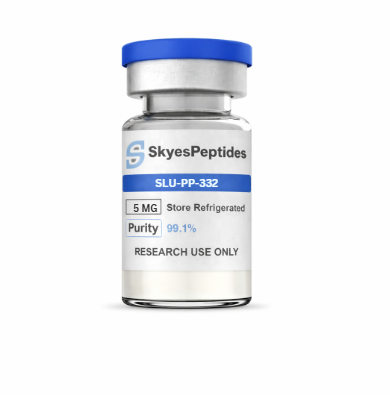
SLU-PP-332 is a synthetic research compound that has drawn interest in scientific communities for its potential role in metabolic regulation, mitochondrial biogenesis, and endurance-related cellular pathways. It is distinct from classical peptides in that it interacts with nuclear receptor signaling rather than acting as a simple signaling peptide. This educational overview explores its mechanisms, scientific context, and relevance in research—including how it fits within the landscape of U.S. scientific investigation.
Although SLU-PP-332 is sometimes colloquially discussed alongside peptide compounds due to its research applications, it is technically a small molecule modulator—which sets it apart mechanistically. Researchers typically study SLU-PP-332 in controlled laboratory settings to understand how it influences gene expression linked to cellular energy regulation.
What Is SLU-PP-332?
SLU-PP-332 has been identified as a modulator of estrogen-related receptor alpha (ERRα), a nuclear receptor involved in the control of genes associated with energy metabolism, mitochondrial function, and exercise-mimicking pathways. Because nuclear receptors act as transcription factors, their modulation can have broad downstream effects on cellular metabolism.
Unlike peptides that bind surface receptors, compounds like SLU-PP-332 can enter cells and directly influence gene transcription. This makes them particularly useful for studying long-term changes in metabolic gene programs rather than acute signaling events.
Mechanism of Action
SLU-PP-332 is hypothesized to activate ERRα, which in turn affects a network of genes that regulate:
- Mitochondrial biogenesis—the process by which cells increase mitochondrial number and function;
- Fatty acid oxidation—a key pathway for energy utilization;
- Endurance-related metabolic pathways—signaling cascades associated with sustained energy output;
- Cellular energy efficiency—influencing how cells balance ATP production and expenditure.
By influencing these pathways, SLU-PP-332 provides scientists a tool to study how nuclear receptor modulation affects systemic metabolic patterns in model systems.
Scientific Research Context
Research on SLU-PP-332 spans in vitro studies and preclinical models, with scientists investigating its effects on cellular energy regulation and gene expression. U.S. research institutions often explore compounds like SLU-PP-332 as part of broader metabolic and mitochondrial biology research. This includes work on how nuclear receptor modulators can influence muscle metabolism, adipose tissue dynamics, and pathways relevant to age-related metabolic decline.
Because nuclear receptors such as ERRα have roles in both basal metabolic processes and adaptive responses (like exercise or nutrient stress), SLU-PP-332 helps researchers investigate how modulating these receptors affects cellular phenotype over time.
Experimental Considerations
In laboratory settings, SLU-PP-332 is typically handled as a research-grade compound under strict protocols. Key considerations for researchers include:
- Purity and characterization—verifying identity using analytical methods such as HPLC or mass spectrometry;
- Storage conditions—maintaining stability under appropriate temperature and moisture conditions;
- Dosing and protocols—carefully recording concentrations and timing to ensure reproducibility;
- Cell model selection—choosing relevant cell types to study metabolic phenotypes.
Because SLU-PP-332 acts through nuclear receptor interactions, experimental design often includes gene expression analysis, mitochondrial functional assays, and metabolic profiling.
Safety and Limitations
SLU-PP-332 is intended strictly for research use and is not approved for clinical use in humans. Its safety profile has not been systematically established outside controlled experimental contexts. Researchers should follow institutional safety protocols and handle all reagents, including SLU-PP-332, under proper laboratory conditions.
Additionally, while research findings can offer insight into potential mechanisms, translating those findings into clinical applications requires extensive study, including controlled trials and regulatory evaluation.
Conclusion
SLU-PP-332 serves as a powerful research tool for exploring nuclear receptor biology, especially regarding energy metabolism and mitochondrial function. Its role in modulating ERRα and downstream metabolic pathways provides valuable insight into how cells regulate energy balance at the transcriptional level. As research continues—including work conducted in U.S. laboratories—compounds like SLU-PP-332 help deepen our understanding of cellular energy regulation and metabolic adaptation.