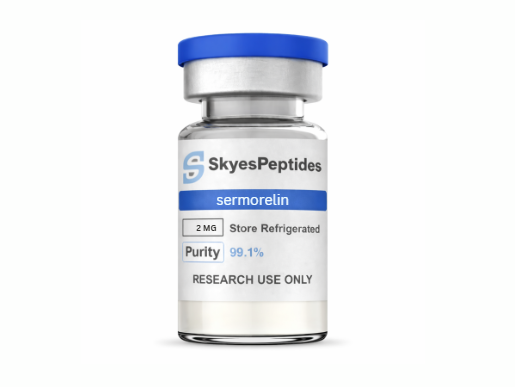
Sermorelin is a synthetic peptide analog of growth hormone–releasing hormone (GHRH) that has been widely studied in endocrinology and metabolic research. Because of growing public interest, many people search for “sermorelin online,” typically seeking scientific information, clinical insights, or laboratory-grade material for research.
This article focuses on how sermorelin is presented and discussed online, how to evaluate information quality, and what researchers consider when reviewing sources. It is intended for educational and academic purposes rather than as a guide to purchasing.
What Is Sermorelin?
Sermorelin (also known as GRF 1–29) is a 29–amino acid fragment of endogenous GHRH. In the body, GHRH stimulates the pituitary gland to release growth hormone (GH), which in turn influences insulin-like growth factor 1 (IGF-1) production in the liver. Sermorelin mimics this natural signaling pathway in experimental and clinical contexts.
In medical research, sermorelin has been explored for conditions related to growth hormone deficiency, metabolic health, and endocrine function. It has a relatively short half-life compared to other GH secretagogues, which influences how it is studied in laboratory settings.
Why People Search for “Sermorelin Online”
Online searches for sermorelin typically fall into three categories:
- Academic and scientific curiosity about how the peptide works.
- Interest in clinical studies and peer-reviewed research.
- Investigation into peptide sourcing standards for laboratory use.
Because the internet contains a wide range of information quality, it is important to distinguish between peer-reviewed science, marketing claims, and anecdotal reports.
Evaluating Sermorelin Information Online
When reviewing online content about sermorelin, researchers and students often look for the following indicators of credibility:
- References to peer-reviewed journals or clinical trials.
- Clear differentiation between research findings and opinions.
- Transparency about study limitations and unknowns.
- Avoidance of exaggerated or absolute claims.
High-quality educational sources typically explain mechanisms of action, summarize relevant studies, and acknowledge ongoing scientific debate.
How Sermorelin Works (Mechanism of Action)
Sermorelin binds to GHRH receptors in the anterior pituitary gland, stimulating pulsatile growth hormone release. Unlike direct growth hormone administration, sermorelin relies on the body’s own regulatory systems, which is why it has been of interest in clinical endocrinology.
This pulsatile release pattern is considered more physiologically similar to natural GH secretion, which follows a circadian rhythm. Researchers study this aspect when comparing sermorelin to other GH secretagogues.
Sermorelin vs. Other Peptides Online
Online discussions often compare sermorelin to other peptides such as CJC-1295, ipamorelin, or tesamorelin. While all influence growth hormone signaling in different ways, their mechanisms, half-lives, and research applications differ significantly.
Sermorelin is generally viewed as one of the more “physiological” GH stimulators in academic literature because it closely mimics natural GHRH activity.
Safety and Regulatory Context
In many countries, sermorelin is regulated as a prescription medication when used in clinical settings. Online information sources should clearly distinguish between medical use, laboratory research, and general educational discussion.
For researchers, proper handling, storage, and documentation are critical. Peptide purity, verification, and manufacturing standards are major considerations in laboratory work.
Common Misconceptions Found Online
Some online sources overstate sermorelin’s effects or present preliminary findings as established facts. Common misconceptions include:
- Portraying sermorelin as equivalent to growth hormone.
- Ignoring its short half-life in pharmacokinetic discussions.
- Failing to differentiate between animal and human studies.
Critical reading and cross-referencing with scientific literature can help avoid these pitfalls.
Conclusion
Searching for “sermorelin online” can yield a broad range of information, from rigorous scientific analysis to marketing-driven content. Understanding the peptide’s biology, reviewing peer-reviewed research, and evaluating source credibility are key to making sense of what is available.
For students, clinicians, and researchers, sermorelin remains an important peptide in the study of growth hormone regulation and endocrine function. Thoughtful, evidence-based exploration of online resources is the best approach to learning about its role in modern biomedical science.